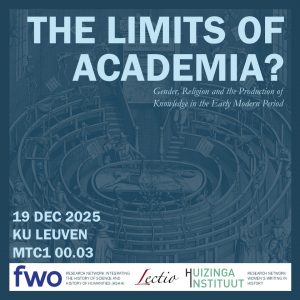
This LECTIO Junior Initiative explores the production of knowledge in the early modern era, critically examining what defined knowledge as “academic” and why certain forms of inquiry were excluded from universities. It will investigate how processes of inclusion and exclusion shaped knowledge and whether these mechanisms were influenced by factors such as gender, religion, or social status. Additionally, the workshop will foster discussion on whether historiographical categories of “academic” knowledge should be reconsidered.
The goal of this workshop is to introduce LECTIO junior researchers and MA-students to the methodological tools of the history of knowledge through hands-on engagement with primary sources. Participants will explore how the transmission of ideas can be integrated into the history of knowledge, focusing on two key themes: religion and gender. These themes will be examined through three analytical lenses central to the history of knowledge—knowledge actors, circulation, and institutions—providing a structured approach to understanding the complex dynamics of intellectual authority and scholarly traditions.
Programme
|
09:30–10:00
|
Registration and coffee
|
|
10:15
|
Welcome and introduction (Richard Calis)
|
|
10:30–12:00
|
Session 1 – Knowledge Actors: The Persona Behind the Academic
|
|
12:00–13:00
|
Lunch Break
|
|
13:00–14:30
|
Session 2 – Circulation: Women and the Production of Theological Knowledge in the Low Countries
|
|
14:30–15:00
|
Coffee Break
|
|
15:00–16:30
|
Session 3 – Institutions: Religion and Natural Philosophy In/Outside Academia
|
|
16:30–17:00
|
Conclusion (Richard Calis)
|